


________________________________________________________________________

Rainbow Trout Stocking Report
Personnel from Fish and Game's McCall and
Nampa Hatcheries will be releasing more than 12,000 catchable-sized rainbow
trout at the following locations during February.
LOCATION WEEK
STOCKED NUMBER OF TROUT
Ed’s Pond (Emmett) February
20 250
Marsing Pond February 27 450/450
Mill Pond (Horseshoe
McDevitt Pond (
Merrill Pond (Eagle) February 13 450
Parkcenter Pond (
Payette Pond
February 20 450
Quinn’s Pond (
Riverside Pond (
Rotary Pond (
Sawyer’s Ponds
February 20
900
Sego Prairie Pond at
Settler’s Pond (
Veteran’s Pond (
Weiser Community Pond February 20 500
The
number of trout actually released may be altered by weather, water conditions,
equipment problems or schedule changes. If delays occur, trout will be stocked
when conditions become favorable.
________________________________________________________________________
Forecast Looks Good for Chinook Salmon Season
If the Chinook salmon returns for 2012 holds
up to the early forecast, this year could be the third best in more than 30
years.
The forecast suggests a return that’s a
little more robust than last year, Idaho Fish and Game fisheries bureau chief
Ed Schriever told the Idaho Fish and Game Commission
Thursday, January 26.
The fish are still out in the
Northwest fish managers estimate that more
than 314,000 Chinook bound for waters upstream of Bonneville Dam will enter the
Of those, 129,000 hatchery fish and 39,000
wild fish are predicted to head up the Snake River to
Last year, more than 33,000 returned to
Salmon River hatcheries and about 13,000 returned to
It’s too soon to tell just how many fish
will actually show up, and what any fishing seasons might look like.
In years past, Chinook seasons have opened in late April.
________________________________________________________________________

Salmon
Region Fishing Information
Regional
rivers and streams have finally begun to drop. While the main
Anglers have
two sections to fish for Chinook salmon. One section opened on June 25 from the
cable car crossing approximately 150 yards below
With warmer
temperatures, access to high mountain lakes is possible. Access to
Fishing on
Mosquito Flats Reservoir outside of Challis has slowed somewhat, but anglers
are still enjoying some good fishing. Rainbow trout are reported to be hitting
on anything from marshmallows to nightcrawlers to
spinners. Rainbow and chartreuse Power Bait is also a good option.
Water levels
in tributaries have dropped and many are now fishable. Terrestrial flies and
grasshoppers are beginning to show up so fly fishermen should try these
patterns or other attractor dry flies to tempt trout.
Don't forget
to check the tackle shop nearest to your fishing destination for fishing
information and equipment.
____________________________________________________________________________
Southwest Region Fishing
Report
We are in transition, at least we hope,
towards cooler temperatures.
Our Recommendation: Bass and catfishing on the Snake
River continues to be very good from
Other reservoir fishing has generally been
slow, but we’re hearing on-and-off good reports from C.J. Strike and Brownlee.
Bass fishing has been best morning and evenings, crappie and perch are mostly
suspended near structure in 15-30 feet of water. If you catch fish, make note
of the depth and type of cover and focus your fishing on similar areas.
Areas around Cascade including Horsethief Reservoir,
Urban fishing ponds will be stocked this
month.
Kokanee spawning
is just about over at Deadwood. IDFG
crews took over 3 million eggs this year to support kokanee
stocking programs across southern and eastern
Stream fishing for trout is also excellent
right now. The upper Middle Fork and
North Fork Boise have great wading
conditions, and the South Fork Boise
just to dropped to perfect wade-fishing flows of 300 cfs.
Fly anglers are still having success with grasshopper patterns or a
“hopper-and-dropper” (large dry fly with a nymph below). Lure fishermen should
try a variety of spinners in pools and deeper runs. Check the fishing rules
book before you go for any special fishing gear or size restrictions where you
plan to fish.
____________________________________________________________________________
On Magic Reservoir boat anglers are reporting good
success. Fish being caught here were regularly 15 inches or larger. Most
fishermen are using worms, marshmallows and power bait.
On Salmon Falls Reservoir anglers report catching
walleye, trout, bass, crappie and perch. Walleye and perch seem to be more
plentiful between the Gravel Pit and Greys Landing.
Anglers have been catching trout all across the reservoir. All kinds of bait
and lures are being used.
Anglers report pretty good trout fishing at Roseworth Reservoir.
Anglers fishing Little Camas are having a good
time. It wasn't very busy last weekend but those fishing were catching trout
between 12-17 inches. Some small mouth bass were also being caught. The
reservoir is almost full and blue green algae is starting to show up.
Kokanee are the
catch at Anderson
Reservoir. Thirteen inch kokanee being
caught from the bank at the dam with spinners. Boat anglers are finding kokanee about 50 to 60 feet deep and fishing seems to be
better from about Fall Creek on up.
For
fly fishing Silver
Creek is the main fishery this spring. However, the Big Wood River
started to clear up last weekend and fish are rising to anglers' casts. The
water is still running hard and wading is challenging.
The South Fork of the Boise is still very high.
____________________________________________________________________
Deer and Elk Outlook for 2012 Hunting
Seasons
Deer and elk numbers are meeting management
objectives in most parts of the state, but some hunter numbers are down
slightly, Fish and Game officials told the Idaho Fish and Game Commission
Thursday, January 26.
Female elk numbers meet or exceed objectives
in 21 of 29 elk management zones; they are below objectives in eight zones.
Bull elk meet or exceed objectives in 20 zones and are below objectives in
nine.
Fish and Game plans to conducting aerial surveys
in the Panhandle,
Mule deer exceed management objectives for
buck to doe ratio. All population management units exceed 15 bucks per 100
does. From mid-December to mid-January, Fish and Game biologists captured and
radio-collared 277 mule deer, including 195 fawns, in 20 game management units.
They are now monitoring 796 radio-marked mule deer in 39 units in 12 population
management units as part of annual mule deer survival monitoring effort.
Dry conditions and the unusually open winter
statewide so far this year, have led Fish and Game to change its aerial survey
plans because deer are spread widely rather than confined to typical winter
range.
Aerial surveys are planned or underway to
estimate populations in Smoky-Bennett, western part of
Harsh winter conditions last year resulted
in the lowest over-winter fawn survival, at 32 percent, and since Fish and Game
began monitoring in 1998-99. Adult doe mortality was as high as 26-36 percent
in four eastern
In response to mule deer monitoring results
last year, antlerless hunt tags and some buck hunt tags were reduced. Because
of low survival of fawns, a lower buck harvest was predicted for 2011 – few
yearling two-points were available.
It’s too early to tell how the mulies will fare this winter, but Fish and Game hopes to
get a better idea from the fawns biologists recently captured and
radio-collared.
White-tailed deer also are meeting
management objectives for buck harvest throughout the state.
All whitetail data analysis units are
meeting management plan objectives for buck harvest and percent of five-points
in the harvest. Unit 4 was slightly below objectives for hunter number and
hunter days, but whitetails are not the major focus for hunters in these units.
The reduced white-tailed deer hunter numbers was for Data Analysis Unit 4,
which includes game management units 16A, 17, 19, 19A, 20, 20A, 26 and 27 –
units where white-tailed deer are not a major management focus.
Whitetail numbers have been improving since
the losses during 2007-2008 and 2008-2009 winters in the northern part of
state. So far the outlook is positive for good numbers next fall.
No formal population surveys conducted for
whitetails.
Fish and Game managers will bring proposed
2012 deer and elk seasons to the Idaho Fish and Game Commission in late
March. It’s too early to tell how the mulies will fare this winter, but Fish and Game hopes to
get a better idea from the fawns biologists recently captured and
radio-collared.
White-tailed deer also are meeting management
objectives for buck harvest throughout the state.
____________________________________________________________________
“Down Under” Poaching Suspects Sentenced
What began as an
All three paid thousands of dollars in fines
and restitution, while forfeiting two hunting rifles before the long plane trip
back home.
Anton Kapeller
(58), Darren Tubb (43) and Samuel Henley (18), all
from
In an expedited process, the three bonded
out of jail six days later and appeared before Magistrate Judge George Hicks
for sentencing on Tuesday, November 15.
Kapeller faced six
misdemeanor counts including possession of unlawfully taken elk, and
aid/counsel the killing of elk during closed season. He received $5,792 in
fines and restitution and a lifetime hunting and
fishing revocation. He also forfeited a hunting rifle used during the trip.
Tubb was charged
with three misdemeanors, including killing a bull elk closed season, wasteful
destruction of elk, and transfer of a big game tag. He received $5,268 in fines
and restitution, loss of a hunting rifle and a lifetime hunting and fishing
license revocation.
More than $16,000 in bond money was also
forfeited.
Because
In his comments to the three men, Judge
Hicks noted that, “the law’s in place for all of us, whether you’re from
Despite the outcome of this particular case,
the investigation continues. Fish and Game conservation officer Marshall Haynes
notes that the Tasmanian hunters first came to his attention in the late 1990s,
when other hunters began reporting suspicious activity associated with the
group. “Mr. Kapeller and his associates have made
dozens of hunting trips to
Persons with any information about suspected
poaching activity are encouraged to call the Citizens against Poaching (CAP)
hotline at 1-800-632-5999, twenty-four hours a day. Callers can remain anonymous
and cash rewards are often paid for information leading to the successful
conclusion of a case.
_____________________________________________________
Mule Deer Attacks Woman in
by Jennifer Jackson –
On Friday, September 30, Sue Panter of Whitney was attacked by a young mule deer buck
while on a walk near her home.
Michael Vaughan and his 17-year-old
daughter, Alexis Vaughan, both of
Panter started her
morning with what was supposed to be a pleasant walk along a road near her
home, enjoying the fall air and taking in the sights and sounds of Whitney’s
rural surroundings. With a cornfield-covered landscape all around her, it was
no surprise to Panter when two mule deer crossed her
path about 100 yards ahead. What surprised her was the young buck that wandered
out of the corn field across the road from her.
At first, the buck simply walked parallel to
Panter’s course. But Panter
became more and more concerned as the buck quickly closed the distance between
them, actually crossing the road and approaching her. She yelled out to
discourage the deer, but even a small handful of gravel thrown at the buck did
not turn him away.
A fearful Panter
bent over to pick up a log she spotted off the side of the road, but before she
could even attempt to grasp the object, the deer knocked her to the ground. At
that point, the buck began raking her body with his antlers, scratching and
digging at her legs and back. Panter played dead,
hoping that her lack of response would discourage the deer. But as the deer gored her in the legs three
times and pummeled her upper body, Panter knew she
had to fight back. She grabbed the
deer’s antlers and fought to keep the animal’s head away from her face and
neck.
Sue Panter’s
spouse, Scott, said his wife was trying to keep herself in plain sight on the
roadway during the struggle.
“She felt that if she got pushed off the
road and into the cornfield, no one would see her struggling or even know she
was there,” said Scott Panter, who was at work when
the deer attack occurred.
Luckily for Panter,
Vaughan and his daughter drove their Ford Excursion down that same road that
morning. Alexis Vaughan first spotted Panter and the
deer struggling. Michael Vaughan said his daughter yelled that someone was
being attacked by a deer. As soon as he
stopped his vehicle, Alexis Vaughan jumped out, ran to the struggling Panter and began punching the deer with her fists. Michael Vaughan
quickly joined in his daughter’s efforts and was able to grab the deer by the
antlers.
Freed from the attacking deer, Panter was able to get herself to
Michael Vaughan said he kept telling his
daughter to “keep hitting, keep doing what you are doing.” Finally, the buck
stood back and then ran off, but the deer had left him with three puncture
wounds on his legs.
Alexis Vaughan drove her father and Panter to the emergency room in
Scott Panter said
his wife was shaken and in shock that this happened.
“She has a difficult time even talking about
it,” Scott Panter said. “We are all in shock and
cannot believe this happened.”
When asked about Michael Vaughan and his
daughter, Panter got quiet and then said: “I am so
grateful for the
Michael Vaughan said that he was glad that
he and his daughter were at the right place at the right time.
“If we hadn’t come up on Panter
when we did, it could have been so much worse,” he said. “I don’t think she
would have made it.”
Blake Phillips, regional conservation
officer for Fish and Game’s Southeast Region, said it is not known for certain
why this mule deer attacked Panter, but behavior like
this is typical of deer that have been hand-raised or “tamed” by people.
“It is incidents like this that remind us
why it is against the law for people to rear wildlife as pets,” Phillips said.
“Animals who have become accustomed or even imprinted on people do not fare
well in the wild on their own, and can become nuisances and even dangerous to
the public.”
Unprovoked attacks by domesticated or “pet”
deer, though very rare, have been reported in
Fish and Game urges anyone who may have
information about this particular deer, including any information about its
origins or its current location, to please contact Fish and Game. Korey Owens, senior
conservation officer for Fish and Game in
Surprisingly, Scott Panter
and his wife hold no ill-will toward mule deer in general following this
ordeal.
“We live in their territory, in their home,”
he says. “An incident like this is so
rare. But if this is all because someone raised a deer as a pet, then let this
be an example of why no one should tame wildlife.”
Jennifer
Jackson is the regional conservation educator for
____________________________________________________________________
Young Boy Not Seriously Hurt
in Mountain Lion Incident
On the evening of September 22nd
about 8 or 8:30 p.m. a young boy went out with his dad to look for a family pet
bird dog that had been missing since the day before.
They were searching in thick sagebrush near
their home in a Mores Creek subdivision when the boy heard noises in the brush.
But instead of the missing dog he had hoped to find, he came face to face with
a young cougar.
He panicked and ran. The lion gave chase.
The boy stumbled and found the cat close by. The cat took a swipe with its
front paw, scratching the boy on the arm and hand. The boy yelled to his
father, who fired a round from his 9 mm handgun to scare the cat away.
Idaho Fish and Game conservation officers,
an off-duty Meridian police officer and a
The female cat was estimated to be about 50
pounds and a year and a half old.
It is not unusual for young lions to get
into trouble after they have left the protection their mother and are trying to
learn to survive on their own, Senior Conservation Officer Matt O’Connell said.
When a lion has made physical contact with a
human, especially in the circumstance of having killed a pet dog, protocol is
to kill the animal, he said.
The boy’s wounds were considered minor.
Such events are rare; this the second
recorded mountain lion incident involving injury to a human in
____________________________________________________________________
Public’s Help Sought in Elk
Poaching Case

Fish and Game is asking the public for
information regarding the poaching of a four-point bull elk northeast of
Citizens Against Poaching (CAP) is offering
a reward for information in the case and callers can remain anonymous. Contact
CAP at 1-800-632-5999 twenty four hours a day.
Responding to the initial report, Fish and
Game conservation officer Matt O’Connell found the poached bull elk dead in the
road near the junction of the 305 and 304A roads in the West Fork Bannock Creek
drainage outside of
Evidence was collected at the scene, but
O’Connell hopes to learn more about the case from an eyewitness or others who
have knowledge of the poaching incident. “I am very interested in visiting with
anyone who has information regarding this poached elk,” O’Connell stated.
In addition to the CAP hotline, persons may
also contact their local Fish and Game office with information regarding this
case.
____________________________________________________________________
Waterfowl Youth Hunts Coming
Up
Youth hunters who want an early shot at a
duck or goose may participate in the youth waterfowl hunt on September 24 and
25.
The youth waterfowl hunt is open to youth 15
and younger.
The regular waterfowl season opens the
following weekend, on October 1 in northern and eastern
The waterfowl youth hunt includes goose,
duck, coot and snipe.
Bag limits for the youth hunt are the same
as for the general season. The daily limit is seven ducks, which may include no
more than one canvasback, two pintails, two redheads, two mallard hens or three
scaup. Youth hunters may also harvest four geese.
Hunters must have a 2011
At least one adult 18 years old or older
having a valid hunting license, must accompany each youth hunting party into
the field at all times. Adults are not allowed to hunt.
All other state and federal migratory game
bird hunting rules and regulations still apply. Please see the 2011 Waterfowl
Seasons and Rules brochure available at hunting license vendors, Fish and Game
offices and online at:
http://fishandgame.idaho.gov/public/hunt/rules/?getPage=66.
___________________________________________________
Lessons
Learned from Ruffed Grouse Research in
By David Musil, Wildlife
Research Biologist
Idaho Department of Fish and Game –
Idaho is rich
with a variety of game birds, but one that has taken the backseat in popularity
to quail, chukars, and pheasants is the ruffed
grouse, relegated to “camp meat” by some big game hunters. Yet a growing number
of us realize and appreciate the challenges of hunting “ruffies.”
Unfortunately, little is known about Idaho’s ruffed grouse, so during the last few years, Department
staff have been studying a population on the Boise National Forest north of Ola
near Sage Hen Reservoir, an area known to hunters as Game Management Unit (GMU)
32A.
During the
spring, male ruffed grouse perch atop downed logs and rapidly flap or “drum”
their wings to attract females. This is the perfect time to take the pulse of
the ruffed grouse population, by counting these “drummers.” During boom years,
counts in forests east of the Rocky Mountains can peak on average at 33
drumming males per square mile, whereas bust years average only 11 males; the
cycle repeats every 10 years or so. In GMU 32A, numbers have held steady at
around 13 males per square mile since 2007.
It is assumed
that the number of female grouse equals that of males, because they hatch at an
even ratio. Females are harder to count because they are very secretive, so
staff tried a technique of playing recordings of chicks in distress to attract
hens into the open. “Peeping” chicks are irresistible to females, which
instinctively want to help a crying chick. The technique yielded much lower
numbers of females than drumming males. More work is needed on this technique
before the conclusion is reached that there are truthfully fewer females. More
study, involving the capture of hens to monitor nest success and chick
survival, also needs to be done in the future.
Male ruffed
grouse aggressively defend their drumming logs from other males, so a mirror
facing the drummer will lure him into a walk-in trap. During the study, 26
drummers were captured and radio-collared with transmitters to track their
movements. These radio-marked males stayed within an average of 190 yards of
their drumming logs year round, finding all they needed for food and cover
within just over 100 acres of forest. When a male ruffed grouse died, he was
replaced on the same drumming log by a different male the following year.
Without radio- collar technology, it might have been wrongly assumed that it
was the same drummer every year. Other data is being analyzed to determine if
suitable ruffed grouse habitat remains in short supply, a shortcoming which
might explain why there are so few grouse compared to boom years back East.
Hunters using the study area were
interviewed and it was discovered that 70 percent of them were primarily hunting
big game; only six percent of these hunters said they would shoot a grouse if
they saw one. Of the grouse harvested, 22 percent were taken incidentally by
big game hunters and 69 percent by true grouse hunters. Only one of the
radio-marked grouse was harvested over the last few years, so it appears that
harvest rates are relatively low.
Most (66
percent) of the grouse harvested were born the previous spring. This is quite
typical, as young game birds are the least wary, and more abundant than adults.
Young birds were about 20 percent lighter than adults and had stubby, partially
grown tails. This results from the fact that opening day of the season is only
12 to 13 weeks from when most ruffed grouse chicks hatch, and they don’t reach
their full adult size before the season opener.
Eastern states start hunting grouse after
mid-September whereas Western states start before mid-September. In
Grouse
harvest in GMU 32A peaks during the first week of the season and again right
before deer season begins, so lengthening the season later into the winter
would likely not affect grouse numbers. Moving the season a few weeks later at
the beginning of the season likely would give juveniles more time to grow, but
it is debatable whether this would increase grouse numbers. An experimental
hunting season with a later opening date might help to solve this riddle.
Many
questions regarding the biology of

Holding tight
by his toes, a ruffed grouse keeps from flying off a rotting log while a blur
of drumming wing beats attracts females and discourages other males from
approaching. Counting these “drummers” gives biologists clues to the abundance
of ruffed grouse in the forest. Photo credit: Keith Kiler.

A male ruffed
grouse captured from his drumming log as part of a research project by the
Idaho Department of Fish and Game. Photo credit: Dave Musil,
IDFG.
___________________________________________________
Upland Game Bird Seasons
Open October 1
This year, the chukar
and gray partridge seasons don’t open until October 1, but the seasons on these
popular game birds remain open statewide through January 31.
Chukar and gray
partridge have a daily bag limit of six chukars and
six gray partridges. The possession limit after the first day is 12 chukars and 12 gray partridges.
Several other upland game bird seasons,
including a limited season on sage-grouse, also open October 1.
The bobwhite and California quail seasons
run from October 1 through January 31 in western
The sage-grouse season opens October 1
through 7, with a one-bird daily limit and two-bird possession limit, in
sage-grouse Area 2. For details, please refer to the 2011 Sage-grouse Seasons
and Rules brochure, available at license vendors and online at:
http://fishandgame.idaho.gov/public/docs/rules/uplandSage.pdf.
The sharp-tailed grouse season opens in most
of eastern
http://fishandgame.idaho.gov/public/hunt/rules/?getPage=67.
Anyone hunting sage-grouse and sharp-tailed
grouse, must have a sage/sharp-tailed grouse permit at $4.75, in addition to a
valid hunting license.
The season for forest grouse, which includes
ruffed, spruce and dusky grouse, opened August 30 and runs through December 31,
except in the Panhandle Region where the season runs through January 31. The
daily limit is four, whether all of one or mixed species, and eight in
possession after the first day. Hunters need only a valid hunting license to
hunt quail, chukar, grey partridge and forest grouse.
______________________________________________________________________
All hunters need a valid 2011
http://fishandgame.idaho.gov/public/hunt/rules/?getPage=67.
___________________________________________________________________
Saturday is National Hunting
and Fishing Day
Hunters and anglers are among the country’s
best conservationists, and in their honor Saturday, September 24, is National
Hunting and Fishing Day.
With birdwatchers, hikers, mountain bikers,
canoeists, backpackers, photographers and other recreationists, lots of
Idahoans love wildlife and wild places.
Today 34 million people hunt and fish in the
This annual total, $1.75 billion, pays for
much of the conservation work of fish and wildlife agencies in every state.
These public agencies serve the residents of their states by overseeing all
fish and wildlife, hunted species such as deer and non-hunted species such as
robins, as well as all aquatic and terrestrial habitats.
About 100 years ago, hunters and anglers
recognized a responsibility for responsible stewardship of the state’s natural
and wildlife resources. They had watched expanding civilization and unregulated
exploitation nearly wipe out some wildlife populations. Many of today’s
conservation ideals were born in that era.
In the 1960s, hunters and anglers embraced
the era’s heightened environmental awareness but were discouraged that many
people didn't understand the role that hunters and anglers played – and
continue to play – in the conservation movement.
In 1972, with urging from the National
Shooting Sports Foundation, Congress unanimously authorized National Hunting
and Fishing Day on the fourth Saturday of every September.
On May 2, 1972, President Richard M. Nixon
signed the first proclamation of the annual celebration. Today, National
Hunting and Fishing Day remains a great promotion for outdoor sports and
conservation.
___________________________________________________________________
A True
The
by Kristin Lohr, Wildlife
Research Biologist and Bruce Haak, Nongame Biologist
Idaho Department
of Fish and Game – Southwest Region
Anyone playing golf at the Rolling Hills
Golf Course in Weiser or the Scotch Pines Golf Course in Payette has probably
noticed ground squirrels running around. Although these squirrels look similar
to other ground squirrels (or “whistle pigs” as they are often called) found
throughout southern
The southern
Historically, southern
Southern Idaho ground squirrels are one of
several protected squirrel species living in
For additional information regarding

The southern
The
attached map shows the distribution of several protected squirrel species,
including the southern

________________________________________________________________________
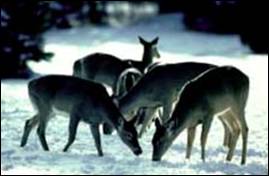
Shadows on the Snow --- Following
Winter’s Wolverines
by Diane Evans Mack, Regional Wildlife Biologist,
Idaho Department of Fish and Game – Southwest Region

A remote camera captures an adult
wolverine investigating a live-trap on the
After eight months of quiet inactivity,
small log cabins are back in service in the wilds of central
Wolverines roam the wilder, more remote
areas of
A research project looking at this question
is led by Kim Heinemeyer of Round River Conservation
Studies and John Squires of the Forest Service Rocky Mountain Research Station.
Idaho Department of Fish and Game is a partner, as are the Payette,
Tracking wolverines is one piece of the puzzle.
Winter recreationists are the other. Last year, back country skiers and
snowmobilers voluntarily wore small GPS data loggers and contributed over 700
individual tracks that mapped where and when they traveled. When overlaid on
the movements of six collared wolverines, these data began to show how these
groups interact. Yet this kind of study requires several years in multiple
locations. Thus begins year two.
On the
To learn more about the study, contact
idahowolverine@gmail.com.
____________________________________________________________________________
Fires May Affect Hunter Access
Fires burning in
In the interest of public safety the U.S.
Forest Service and Bureau of Land Management may close access to some areas as
fires grow or new fires start. Those road closures may affect access to some
hunting units.
But Idaho Fish and Game will not recommend
closing hunts or altering season dates in response to fire restrictions. Most
fires are not large enough to affect an entire hunt unit.
Hunters affected by a fire closure can
adjust their schedule to hunt later in the season or exchange general tags to
hunt in a different area. But tags must be exchanged before the season begins.
Hunters with controlled hunt tags affected
by a fire closure may exchange them for general season tags before the
controlled hunt begins. But controlled hunt fees would not be refunded.
Fish and Game will consider requests for
rain checks or refunds in the event that access to a hunting unit is blocked by
fire. Hunters requesting a rain check will be required to submit their tags and
permits with a letter describing the conditions of their request.
Rain checks would be evaluated case-by-case
at the end of the hunting season. Rain checks will be valid in 2012 and offered
only for the same species and hunt area as the hunter held in 2011.
Written requests should be sent to the
license section at Fish and Game,
Hunters and anglers, and anyone else heading
into the backcountry, are advised to check with Forest Service ranger district
offices or county sheriffs’ offices before heading out. Fire updates can be
found online at: http://www.inciweb.org/state/13/.